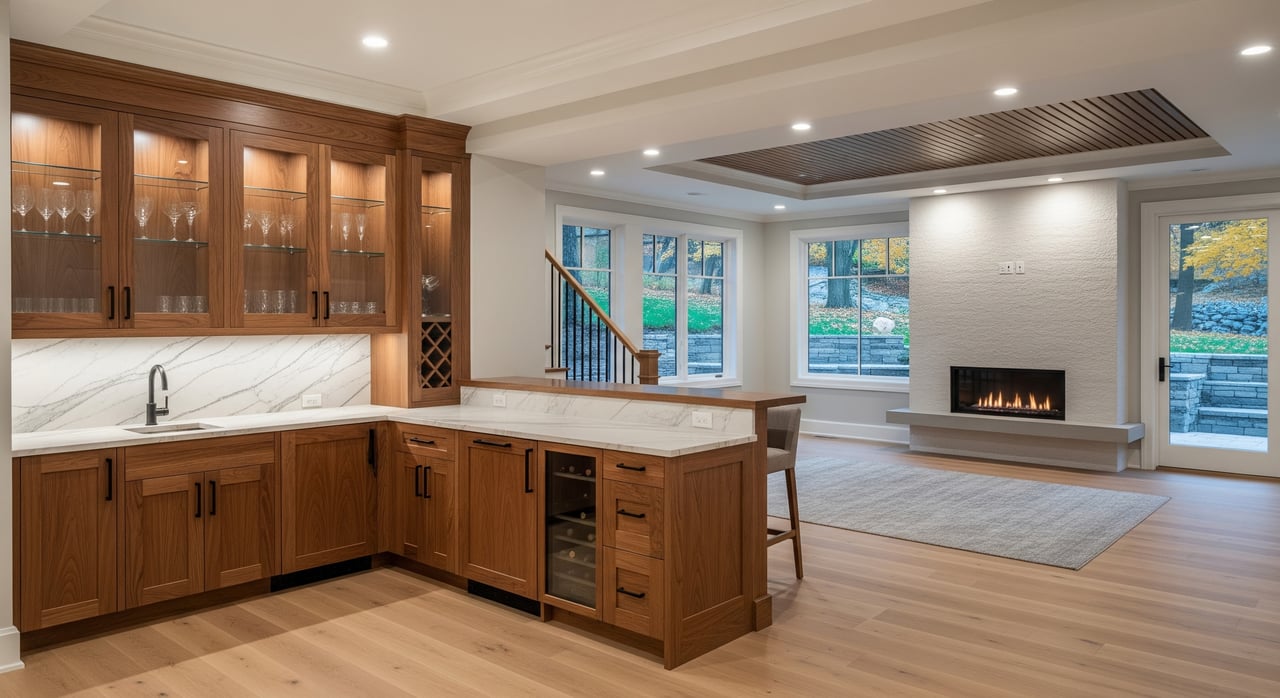
Wondering which basement upgrades will actually help your Cuyahoga Falls home sell for more? You are not alone. Turning a lower level into comfortable living space can be a smart move if you plan it with moisture, safety, and code in mind. In this guide, you will learn what to do first, what to skip, and how to create a bright, healthy space buyers will love. Let’s dive in.
Start with moisture and a dry foundation
A finished basement is only as good as its moisture control. Summit County has cold winters and humid summers, so you need a plan that keeps water out and indoor humidity in check.
Fix drainage and cracks outside
Look for puddling near the foundation after rain. Regrade soil so it slopes away, and extend downspouts so water discharges well away from the house. Seal visible foundation cracks and repair any water entry points before framing. Keeping bulk water out is the first win for durability and comfort.
Control groundwater with drain tile and a sump
If you have signs of groundwater pressure, interior perimeter drain tile and a sump pump are common in Northeast Ohio. Many owners add a battery backup pump to keep water moving during storms. This kind of infrastructure gives buyers confidence that your finish is protected.
Keep humidity under 50 percent
Basements often need dehumidification to stay comfortable and prevent mold. Ventilate bathrooms and laundry to the exterior and use a dedicated dehumidifier if needed. Follow the CDC’s mold and moisture guidance and address any visible mold promptly before you build walls.
Test for radon before you finish
Ohio has areas with elevated radon. The EPA recommends testing every home and mitigating if levels are at or above 4 pCi/L. Test before construction, and consider adding a passive mitigation provision, like a vent stack from under-slab gravel, so an active fan can be added later if needed.
Plan a layout buyers can use
Function comes first. Decide if the space will serve as a family room, home office, bedroom, or a mix. Plan circulation, storage, and mechanical access around that use.
Bedrooms and egress are linked
If you want a basement bedroom, plan for an egress window or door that meets the adopted residential code. The International Residential Code typically requires about 5.7 square feet of net clear opening, a maximum sill height of 44 inches above the floor, and minimum well dimensions for below-grade windows. Review the International Code Council resources on residential egress and confirm exact local requirements with the building department before you start.
Bathrooms near existing stacks
Put bathrooms or a wet bar near current soil stacks or sanitary lines to reduce cost and complexity. Include a properly sized, exterior-vented exhaust fan to control moisture.
Stairs, headroom, and ceiling height
Comfortable, code-compliant stairs and headroom improve daily use and appraisability. The IRC generally calls for around 7 feet minimum ceiling height in habitable rooms. Verify exact local standards and avoid creating low bulkheads in key circulation areas.
Storage and mechanical access
Buyers want livable space and practical storage. Add closets and keep mechanical rooms accessible for service clearances. Plan access panels for shutoff valves, cleanouts, and junctions so future repairs are simple.
Meet life safety and permits in Cuyahoga Falls
Most basement finishing projects require permits and inspections for framing, electrical, plumbing, HVAC, insulation, and final occupancy. Unpermitted work can be a red flag for buyers and lenders.
- Smoke alarms are typically required, often interconnected across levels.
- Carbon monoxide detectors are required when you have fuel-burning appliances or an attached garage.
- Bedrooms trigger egress, ventilation, and sometimes additional alarm requirements.
Confirm specifics with your local officials and the adopted code edition. The International Code Council site is a good starting point for code language.
Get the mechanicals right
Comfort and safety start with proper HVAC, electrical, and plumbing.
Heating, cooling, and dehumidification
You can extend existing ductwork, create a new zone, or install a ductless mini-split that heats and cools without major ducts. Right-size the system based on load calculations and plan for dehumidification to keep relative humidity below about 50 percent.
Electrical circuits and safety devices
Provide ample lighting and receptacle circuits. Many basement receptacles and all outlets in wet areas require GFCI protection. Bedrooms may require AFCI protection. Follow current electrical code requirements and coordinate inspections.
Bathroom plumbing and venting
Rough-in drains and vents early. A full bath adds utility but costs more. A simple powder room can be a strong ROI choice in many neighborhoods.
Insulate and air seal for comfort
The goal is warm surfaces and dry assemblies that resist condensation.
- Use moisture-tolerant insulation strategies. Building-science guidance often prefers continuous rigid foam or closed-cell spray foam on foundation walls to limit condensation risk compared with vapor-trapping approaches. See Building Science Corporation guidance for best practices.
- Air seal the rim joist, penetrations, and any duct chases. Insulate supply and return runs.
- For general building envelope tips, the U.S. Department of Energy provides guidance you can discuss with your contractor.
Light and finishes that feel like upstairs
Basements win buyers over when they feel bright, safe, and easy to maintain.
Maximize daylight
If your site allows, enlarge or add egress windows that double as light sources. Use reflective window well liners and orient living areas near openings.
Layer your lighting
Combine ambient lighting with task and accent lighting. Recessed LED downlights or surface fixtures provide even light. Add stair lighting and toe-kicks at transitions for safety and a higher-end feel.
Choose the right color temperature
Pick warmer or neutral LEDs for living spaces. Around 2700 to 3500K feels cozy, while 3500 to 4100K reads clean and neutral. Lighter wall colors and higher-reflectance finishes help bounce light around.
Durable, moisture-smart finishes
Use tile, luxury vinyl plank, or water-resistant engineered wood with a vapor-tolerant underlayment. Avoid carpet in areas prone to moisture. Vent baths and laundry to the exterior to protect finishes.
Prioritize for ROI with this sequence
Focus your budget where buyers and inspectors look first. This step-by-step order helps you finish confidently and avoid rework.
- Moisture and infrastructure
- Fix grading, gutters, and downspouts, repair foundation issues, add interior drain tile and a sump if needed, and test for radon. Add passive radon provisions.
- Egress and life safety
- Install egress where bedrooms are planned, verify stairs and alarms, and pull permits.
- Mechanical, electrical, plumbing
- Right-size HVAC and dehumidification, add circuits and GFCI or AFCI protection, and rough-in plumbing.
- Insulation and air sealing
- Insulate foundation walls and rim joists and seal penetrations for comfort and efficiency.
- Finishes, lighting, and storage
- Keep the palette simple and neutral, add layered lighting, and include practical storage.
- Optional value-adds
- Consider a second bath, wet bar, or separate entry if neighborhood comps support it.
Check flood and sewer risks
Before you choose finishes, review the property’s flood status on the FEMA Flood Map Service Center. If your area has a history of sewer backups, discuss backflow prevention and flood-resistant finish strategies with your contractor. Planning for resilience protects your budget and boosts buyer confidence.
What to skip or scale back
Avoid over-customizing with costly built-ins or a full kitchen unless local comps show clear demand. Focus on clean, bright space that functions for media, work, fitness, or guests. Keep materials durable and low-maintenance, and document all permits and inspections for your listing package.
Your next steps
- Start with a moisture and radon check.
- Sketch a layout that fits your goals and egress needs.
- Get quotes for egress, MEP work, and insulation before selecting finishes.
- Pull the right permits so your project appraises cleanly and satisfies lender and buyer requirements.
If you want a local pricing lens on finish levels and a reliable list of contractors for drains, egress, and lighting, connect with Shelly Booth. With a concierge approach and deep knowledge of Akron-area buyers, Shelly can help you prioritize the right upgrades, coordinate repairs, and list with confidence when you are ready.
FAQs
Will a finished basement count as square footage in Cuyahoga Falls?
- It can count toward marketable living area if it is dry, heated and cooled, finished to code with permits and inspections, and any bedrooms have compliant egress and required alarms.
What are the egress window rules for basement bedrooms?
- The IRC generally requires about 5.7 square feet of net clear opening, a sill height no higher than 44 inches, and compliant window wells, but confirm exact local requirements with officials and review the ICC resources.
How should I handle radon before finishing a basement?
- Test first, and if results are at or above 4 pCi/L, plan mitigation per EPA radon guidance; adding a passive vent provision during construction makes future active mitigation easier.
What flooring is best for Summit County basements?
- Choose durable, water-resistant options like tile or luxury vinyl plank with a vapor-tolerant underlayment, and avoid carpet in areas with any moisture risk.
Do I need permits to finish a basement in Cuyahoga Falls?
- Yes, most projects require permits and inspections for framing, electrical, plumbing, HVAC, and insulation, and documented permits help buyers and lenders feel confident in your home.