Search "Fairlawn Ohio home prices" and open the first five results in separate tabs. You will get five different numbers, and none of them agree by even a little. That is not a glitch in one dataset. It is what happens when a city this small, this newly built-out, and this easily confused with its neighbor produces a housing market too thin for any single median to describe.
Here is what shows up if you actually run that search this year:
| Source | Figure Reported | What It Measures | Time Window |
|---|---|---|---|
| Zillow's home value index | $280,887 | Estimated typical value across all homes | Recent 12-month snapshot |
| Redfin | $303,000 | Median sale price of closed transactions | January 2026 |
| Movoto | $605,000 | Median list price of active listings | May 2026 |
| Prop:Metrics | $401,000 | Median home price | October 2025 |
| Data USA (Census-based) | $284,600 | Median property value | 2024 |
That is a spread of more than $320,000 for the same four and a half square miles. If you are cross-shopping Fairlawn against Hudson or North Canton and treating any one of these numbers as "the" Fairlawn price, you are comparing your budget to a figure that may not describe the segment of the market you would actually buy into.
The Math Behind a Six-Home Month
Fairlawn has roughly 7,800 residents living in something like 3,300 to 3,500 households, packed into 4.49 square miles. That is a small enough population that Redfin's own transaction count for January 2026 showed just 6 homes sold that month, down from 10 the year before.
When your entire monthly sample is six closings, one new custom build starting in the upper $400,000s and one modest ranch near West Market Street can swing the median by tens of thousands of dollars in either direction. A market with 600 monthly sales absorbs an outlier. A market with 6 does not. This is the first reason the numbers above disagree: they are not measuring a stable population, they are measuring whatever handful of closings happened to land in that particular window.
Two Fairlawns Under One Zip Code
The second reason is that Fairlawn's housing stock is not one market, it is two, sitting inside the same city limits.
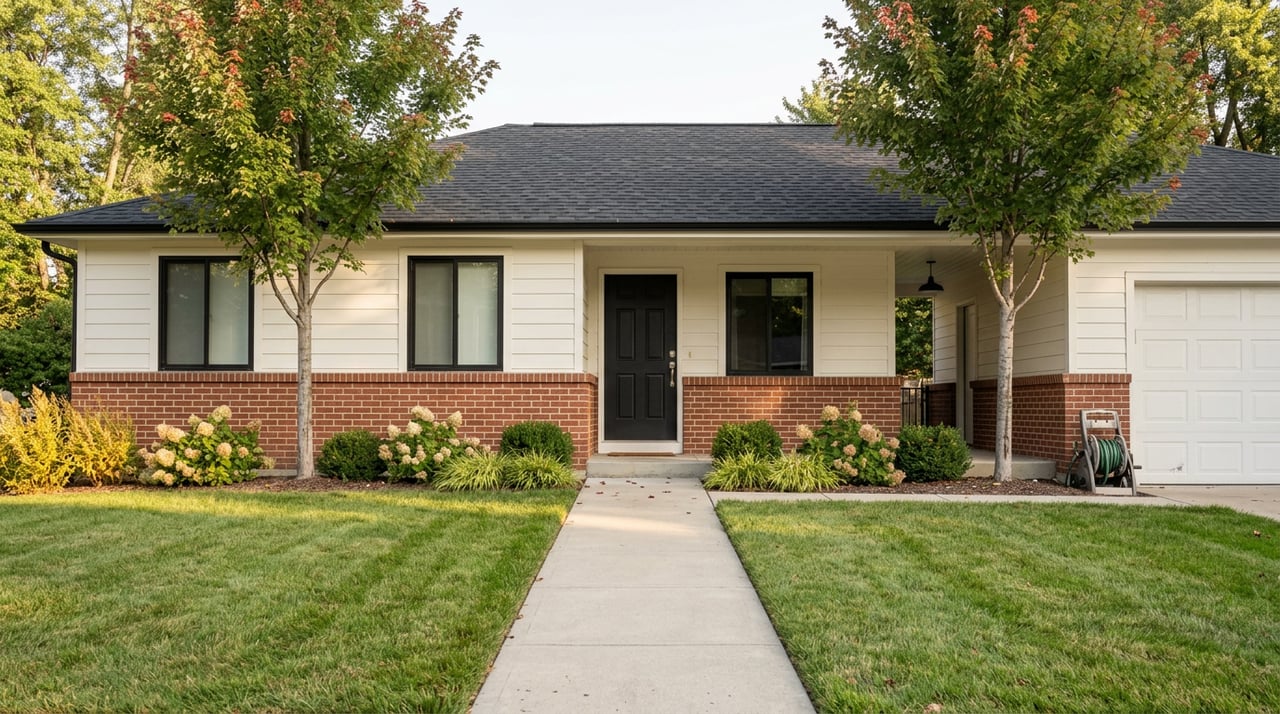
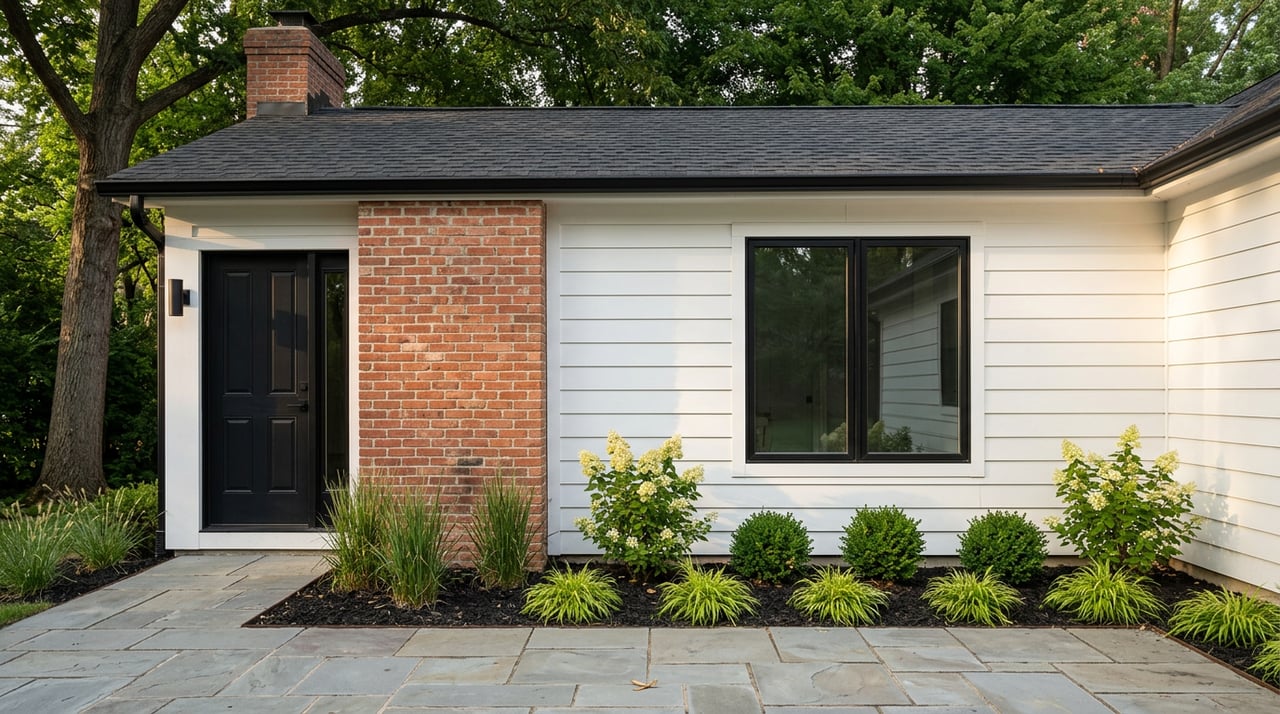
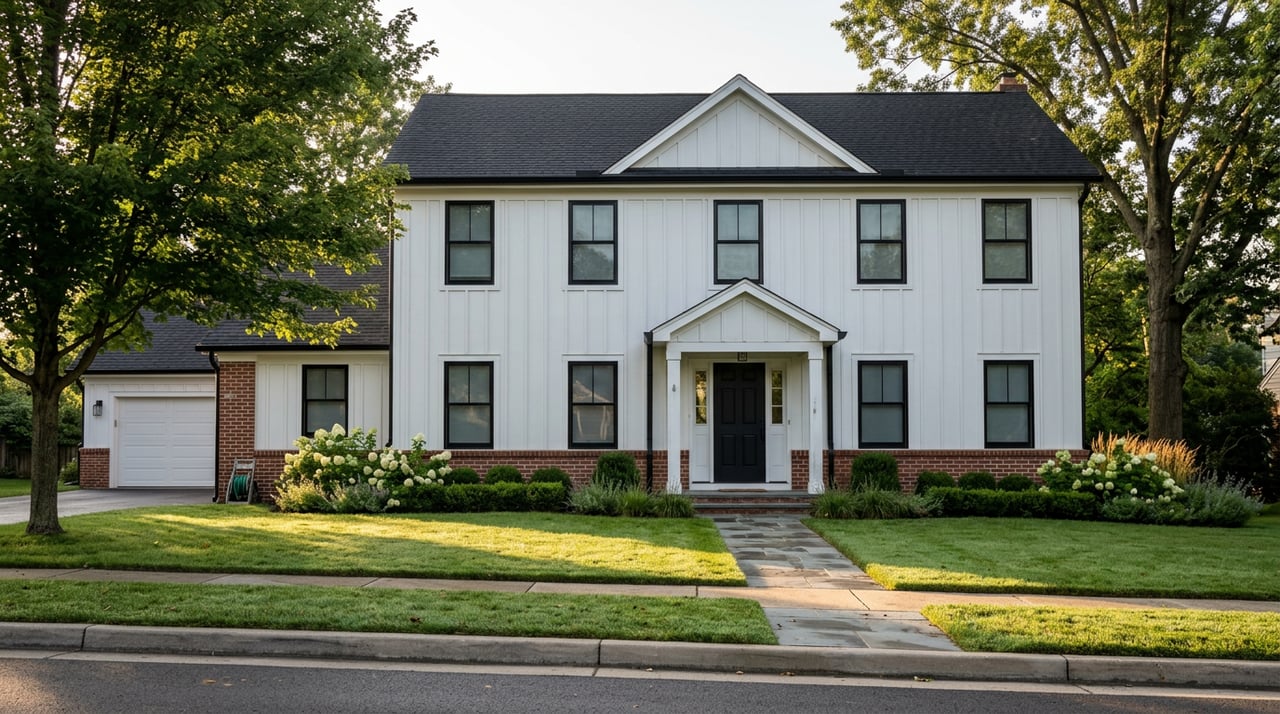
On one side you have the established stock: ranch and colonial homes built mostly after the city incorporated in 1960, the kind of resale inventory that anchors the lower end of every price report above.
On the other side, new construction has been actively reshaping what "a home in Fairlawn" costs. Rosemont Ridge, a custom-home community built on homesites ranging from about 0.35 to 0.7 acres, has drawn builders including Memmer Homes and Coblentz Homes, with Coblentz reporting only 13 homesites left as of their most recent update. Just down the road, Rosemont Reserve has single-family homes from Drees Homes starting in the upper $400,000s, according to the city's own project Q&A. And a newer 22-unit development called Momentum Townhomes is bringing three-story, attached-garage townhomes to a site near West Market Street and Morewood Drive, aimed at buyers who want less maintenance without leaving the area.
None of this is speculative growth. It is new supply that did not exist a few years ago, actively closing at price points well above the older resale stock. Every time one of these new builds sells, it pulls the median list price up even if the resale side of the market stays flat, which is exactly the kind of split you can see between Redfin's $303,000 closed-sale median and Movoto's $605,000 list-price median from the same general period. One number is weighted toward what has already sold. The other is weighted toward what is currently for sale, and a disproportionate share of current inventory sits in the new-construction segment.
The Neighbor With the Same Name
The third mechanism is the one most buyers never think to check: some of what gets counted as "Fairlawn" isn't Fairlawn at all.
Fairlawn Heights is a historic Akron neighborhood immediately southeast of the City of Fairlawn, built in the 1910s and 1930s as executive housing tied to the Goodyear Tire and Rubber Company, and it is not part of Fairlawn's city limits. As Signal Akron put it in a 2025 neighborhood profile, that fact "may come as a surprise to some Akronites." The Tudor and Georgian revival homes there, many in the 3,000 to 10,000 square foot range, sit in a completely separate municipality with its own tax structure and its own price history, some of it running much lower per-square-foot than City of Fairlawn new construction and some of it, for the largest historic homes, running well above it.
Because the two places share a name and sit next to each other, boundary data used by automated valuation tools can blend them. A search that is supposed to return "Fairlawn" pricing can end up folding in a market defined by hundred-year-old Tudor mansions on half-acre lots, which is a very different comparison than the modern colonial or new-construction townhome you might actually be looking at.
What This Means If You're Actually Comparing Suburbs
None of this means the numbers are wrong. It means each number is answering a narrower question than "what does a home in Fairlawn cost," and the narrower question matters more than the headline figure.
Before you use any published Fairlawn price to compare against another Akron-area suburb, it is worth asking:
- Is this a sale price or a list price? They answer different questions and, in a market this thin, can diverge by six figures.
- Does the time window matter? A figure from October 2025 and one from May 2026 are not describing the same seven months of new construction closings.
- Is this City of Fairlawn, or does it include Fairlawn Heights? The two are administratively separate, and their housing stock does not resemble each other.
- Which school district actually applies? Most of the city falls under Copley-Fairlawn City School District, but some properties marketed under a Fairlawn address sit in the Revere Local School District instead, which is the kind of detail that only shows up when you check the specific parcel rather than the neighborhood label.
That last point matters even for buyers who are not thinking about schools as a decision factor. If a listing's boundary and district don't match the surrounding blocks, it is a signal that the "Fairlawn" label on that home covers more ground, and more variation, than the city limits suggest.
A Few Straight Answers
Is Fairlawn part of Akron? No. Fairlawn is its own incorporated city in Summit County. Fairlawn Heights, despite the name, is a separate Akron neighborhood next door.
Why do new listings and closed sales show such different prices right now? Recent inventory has skewed toward new construction in developments like Rosemont Ridge and Rosemont Reserve, which lists higher than the older resale stock that makes up most closed sales. Comparing a list-price figure to a sold-price figure without accounting for that mix will always look like a contradiction even when both numbers are accurate.
Should I trust an automated home value estimate for a Fairlawn property? Treat it as a starting point, not an answer. In a market where a single month's closings can be counted on two hands, an automated estimate can lag or overshoot what a specific block, lot size, or new-construction premium is actually doing. A conversation about the actual comparable sales on that street will tell you more than any index number.
Fairlawn rewards buyers and sellers who ask which market they are actually looking at before they anchor to a number. If you are weighing Fairlawn against another Summit County suburb, or trying to figure out what your own Fairlawn home is worth given how differently the new-construction and resale segments are trending, Shelly Booth can walk through the actual closed comparables on your specific block rather than a citywide average that may not describe it. Get Your Instant Home Valuation to start with real numbers instead of a guess.