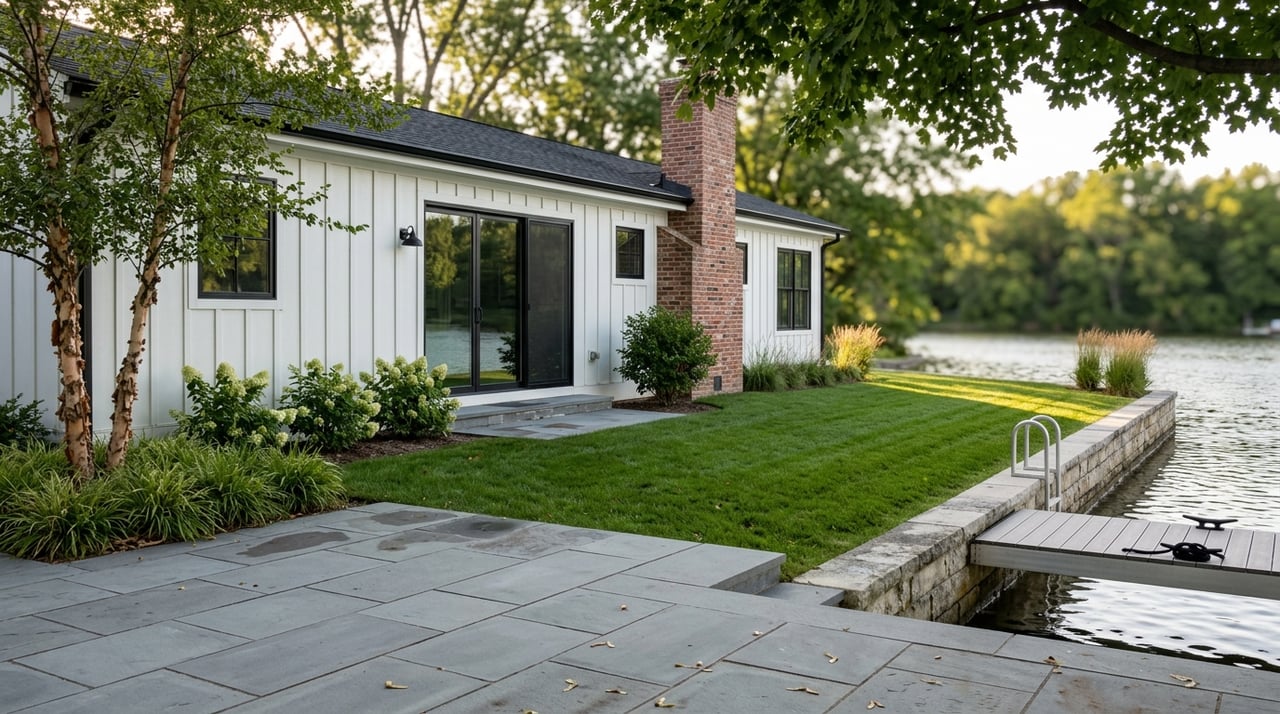
If you picture lakefront living as simple and carefree, Portage Lakes may surprise you. Buying here can be incredibly rewarding, but it comes with more moving parts than a typical suburban home purchase. If you want the view, the dock, and the day-to-day lifestyle without costly surprises, it helps to know what to check before you buy. Let’s dive in.
Why Portage Lakes buying is different
Portage Lakes is not just a neighborhood with water views. It is a multi-use chain of lakes in Coventry Township, New Franklin, and Green, just south of Akron, and it functions as a regional recreation, economic, and natural resource.
The lake system also operates inside a broader management framework. According to the regional management plan, the lakes draw about 300,000 visitors each year, receive water from a 74-square-mile watershed, and are managed for flood control and northward water transfer across the basin divide.
That matters because buying here is not simply about the house. Your ownership experience can also be shaped by shoreline rules, boating traffic, dock paperwork, water-quality work, and seasonal lake activity.
Know your waterfront type
One of the biggest mistakes buyers make is assuming all waterfront is the same. In Portage Lakes, the type of frontage you buy can change how you use the property every day.
You may see direct lakefront homes, canal-front properties, restored cottages, ranch homes, and larger waterfront houses with docks and seawalls. The area also includes homes off the water, so Portage Lakes is better understood as a mixed lake community rather than one uniform housing style.
Frontage affects daily living
A main-chain frontage may offer a different experience than a quieter canal or secondary water edge. The difference can affect boat traffic, noise, privacy, wake exposure, and how useful your dock is for your plans.
Some buyers want quick access to busier boating areas. Others prefer calmer water and a quieter setting. Before you fall in love with a home, make sure the exact water access matches how you actually want to live.
Check dock rules early
In Portage Lakes, dock ownership and use are not informal matters. Because shoreline use is regulated, you should verify paperwork early in the process and not assume an existing dock automatically transfers without questions.
The Portage Lakes Advisory Council says ODNR sends annual dock license renewals, late renewal can result in a $25 late fee, and dock contracts must be renewed each year to avoid losing docking privileges. Ohio rules also require current dock tags on private docks by June 1.
Ask for dock documents
Before you move forward, ask the seller for copies of:
- The current dock contract
- Renewal notices
- Dock tags or related paperwork
- Any permits tied to dock, deck, or seawall work
If work was done on or next to state park property, including dock, deck, and seawall repairs, a permit from the park office is required. That makes documentation especially important during your due diligence.
Understand swim and boating restrictions
Water access is a major reason people buy in Portage Lakes, but the rules vary more than many buyers expect. That is why it is smart to confirm what is allowed at your specific frontage rather than relying on assumptions.
Ohio Administrative Code says swimming, bathing, diving, or wading is allowed only in officially designated swimming areas. On the Portage Lakes, a person may not swim, dive, wade, or bathe more than 60 feet from a private dock, private moorage, or other authorized private structure, and it is also unlawful from shorelines next to channels with heavy boat traffic.
Seasonal boating zones matter
Some watercraft restrictions are tied to designated activity zones at Portage Lakes State Park. Those rules change seasonally between Memorial Day and Labor Day, and from Labor Day to Memorial Day.
That means two homes on the water may offer very different experiences depending on their location. If you are planning to boat, swim, or keep watercraft at the property, ask whether the frontage sits near a ski area, activity zone, or high-traffic channel.
Budget for lake-specific costs
The purchase price is only part of the story with a lakefront home. Carrying costs can be different from what you would expect in a more typical neighborhood.
Utility service is one example. Summit County says its Department of Sanitary Sewer Services serves Coventry Township, including Portage Lakes, while Akron also has its own residential sewer rate structure. A buyer should confirm whether a specific property uses Akron utility service, county sewer, or a private system before estimating monthly costs.
Septic may require more planning
If the home uses septic instead of public sewer, routine upkeep becomes part of ownership. EPA guidance says septic tanks should generally be inspected every 1 to 3 years and pumped every 3 to 5 years.
The same guidance estimates regular maintenance at about $250 to $500 every 3 to 5 years, compared with roughly $5,000 to $15,000 for repair or replacement of a conventional failed system. Even if a home looks great on the surface, the utility setup deserves careful review.
Flood insurance can affect affordability
Flood risk is another item to check early. FEMA says flood maps are the official tool for determining flood hazard, and lenders can require flood insurance even outside high-risk zones.
FEMA also notes that NFIP policies usually have a 30-day waiting period unless coverage is tied to a loan closing or another limited exception. In practical terms, it is wise to review flood zone information before inspections are finished, not at the last minute.
Boat costs add up too
If you plan to keep a boat, registration is another recurring expense. Ohio’s three-year watercraft registration schedule sets fees by class, ranging from $12 or $17 for canoes, rowboats, and inflatables to $30, $45, $60, $75, or $90 for larger watercraft classes, plus a $3 writing fee.
That may not sound huge on its own, but boat ownership often comes with other practical costs too, like winterization, storage, upkeep, and dock-related maintenance. A realistic budget helps you enjoy the lifestyle more fully.
Expect ongoing lake maintenance issues
Portage Lakes living can be beautiful, but it is not a set-it-and-forget-it environment. The broader lake system has active management issues that can affect usability and expectations over time.
The regional management plan describes the lakes as eutrophic, which contributes to dense aquatic vegetation. The Portage Lakes Advisory Council also notes ongoing vegetation inventories, weed control efforts, and a dredging project expected to continue for several years.
What this means for buyers
Lake-wide maintenance work can improve navigation and long-term use. At the same time, it can also mean temporary inconvenience near the water and an ownership experience that feels more hands-on than a standard suburban home.
If you are comparing Portage Lakes to a non-waterfront property, this is one of the clearest tradeoffs. You may gain recreation and water access, but you should also expect a more maintenance-aware lifestyle.
Think about year-round use
Many buyers focus on summer, but a lakefront home should work for you in every season. Winter use, freeze-thaw cycles, and shoreline conditions can all shape how practical a property feels once you own it.
ODNR rules cover snowmobiles, ice boats, and all-purpose vehicles on frozen waters at Portage Lakes State Park, including a 20 mph limit within 100 feet of any shoreline. That is a reminder that winter activity is regulated too.
You should also ask practical questions about ice formation, dock storage, shoreline wear, and access during colder months. A home that feels perfect in July may come with a different set of considerations in January.
A smart Portage Lakes buyer checklist
If you want to reduce surprises, focus your due diligence on the details that most affect waterfront ownership.
Questions to ask before you buy
- What exact frontage am I buying?
- Is there a current dock contract, and has it been renewed?
- Does the sale include the dock, lift, seawall, and related improvements?
- Were dock or seawall improvements properly permitted?
- Are there boating or activity-zone restrictions near this frontage?
- Is the property on county sewer, Akron utility service, or septic?
- If septic, when was it last inspected or pumped?
- What flood zone is the property in, and what might flood insurance cost?
- What recurring costs should I expect for the dock, boat, shoreline, and seasonal upkeep?
- How does the property perform during winter and freeze-thaw cycles?
These questions are not about being overly cautious. They are about buying with clear eyes so your lakefront home fits both your lifestyle and your budget.
Why local guidance matters
Portage Lakes offers a unique kind of homeownership experience. It can be a great fit if you want water access, recreation, and a property that feels closely tied to the lake lifestyle.
It also rewards buyers who pay attention to the fine print. Frontage type, dock rights, utility setup, flood considerations, and seasonal rules all deserve a close look before you commit.
If you are thinking about buying a lakefront home in Portage Lakes, having a local guide can make the process much easier. Shelly Booth brings the kind of detail-focused, neighborhood-level insight that helps you ask the right questions before you buy.
FAQs
What makes buying a lakefront home in Portage Lakes different from buying a regular home?
- Portage Lakes is a managed multi-use lake system, so your ownership experience may include shoreline rules, dock renewals, boating regulations, water-quality issues, and seasonal maintenance considerations that are less common in a standard suburban purchase.
What should buyers verify about a dock at a Portage Lakes home?
- You should verify the current dock contract, annual renewal status, dock tags, and whether any dock, deck, or seawall work had the proper permits, especially if work was done on or next to state park property.
Are there swimming restrictions for Portage Lakes waterfront homes?
- Yes. Ohio rules say swimming, bathing, diving, and wading are allowed only in designated swimming areas, and on the Portage Lakes a person may not go more than 60 feet from a private dock or other authorized private structure, with additional restrictions near heavy-traffic channels.
Do Portage Lakes homes always connect to public sewer?
- No. A property may be served by county sewer, Akron utility service, or a private septic system, so you should confirm the setup for the specific home and review maintenance history if the property uses septic.
Should buyers check flood insurance before making an offer on a Portage Lakes home?
- Buyers should check flood risk early because flood maps are used to determine hazard, lenders may require flood insurance even outside high-risk zones, and policy timing can affect your transaction planning.
What ongoing costs should buyers expect with a Portage Lakes waterfront property?
- In addition to normal homeownership expenses, you may need to budget for dock renewals, seawall or shoreline upkeep, septic maintenance if applicable, flood insurance, boat registration, boat winterization, and other lake-related maintenance costs.
Do Portage Lakes boating rules change by location?
- Yes. Watercraft restrictions can depend on whether the property is near designated activity zones, ski areas, or high-traffic channels, and some rules vary seasonally between Memorial Day and Labor Day and the rest of the year.
Is Portage Lakes a good fit for year-round waterfront living?
- It can be, but buyers should look beyond summer and ask about winter access, ice conditions, freeze-thaw impact, dock storage, and any seasonal rules that may affect how the property functions throughout the year.